
HAPPY JUNETEENTH
We came in hot to our workshops these past two weeks reading more Galway Kinnell, this time the poem Memories of My Father. Written in seven sections, Memories exacts scenes from a life that span generational transitions: father to son, son to father, father to son. As we read the poem, our writers found this central question, “Can a father give his son/what he himself never possessed,/ or lacks the courage to wish up from his own deprivation?”
The men dug deep for discussions about intergenerational trauma, lessons taught by imperfect men, and the conflicted sense of gratitude they felt to their fathers. From Snake River, Richard Simms writes: They say when our parents pass away, we inherit a portion of their spirit, and any item which they possessed still holds their energy that you can feel any time you are near it. A light whisper in the wind from ancestors, calm your breath, ease your thoughts, and you will hear them. Though my father wasn’t around much, I sense the healing of his touch, a magnitude of forgiveness…
Richard went on to tell us about the man who took on the role of father — a person who said what he intended to do and then, had the inexplicable will to follow through. This trait seemed remarkable to Richard when he was younger. He swells with pride as he describes this man who anchors his life. Through his description, we feel this remarkable father enter our writer’s room.
Jesse Jay Jimenez expresses the intricately knotted lessons that may contain a boy’s pain and anger, shame and maybe even a sense of betrayal when those lessons are harsh: A father must make a man out of a boy so that the boy can continue to make men from boys. The making of a man does not always look nice or safe. The world is as a complex wilderness — as raw and violent as the Jurassic era … The boy is a man possessing gifts only a father can give. Only if the boy is strong enough can he possess whatever can bestow upon him. The world is also sophisticated, complex and organized but shrouded in cowardice. The boy must be strong. He must be quick-witted and patient. The living is not fair as opposed to death which cared not of age, value, size, or desire. Life is good and death is bad. How is there then that life is unfair and death is most fair?
And still, we read gratitude for the life a father provides, and acceptance that this is necessary rite of manhood. He recognizes that the boy must be taught to survive in a world that tips the scale toward a son’s demise. Osmus Garfield writes on a similar plane: The push that a boy needs by his father — the good or bad, the whippings, the rewards, the words that he said that went in one ear and other the other… now wishing, I just listened to what he said, knowing his spirit lives on through me.
In Thoughts on My Father, Phillip Luna writes: I’ve always thought my father was indestructible — impermeable to pain and unbreakable. He had some sort of inherent ability, some built-in capacity that I would never have.
My dear friend Becca once said to me that parenting allowed her to redefine the parent-child relationship. She’s right, the hands of the clock point to different circumstances, new models. We pull forward the good we recall from our upbringing and remodel to meet the moment. Here, Phillip Luna parents from prison, showing that he indeed has a built-in capacity that he never thought he would have. When we were with Philip last, he said his son would be visiting this week, the first in-person visit in eleven years, from Dust:
My son, barely a teenager then, wanted to learn. He played one of my old guitars that I had left behind. I bought him strings on his birthday. I wrote and mailed him tabs and riffs I’d made up.
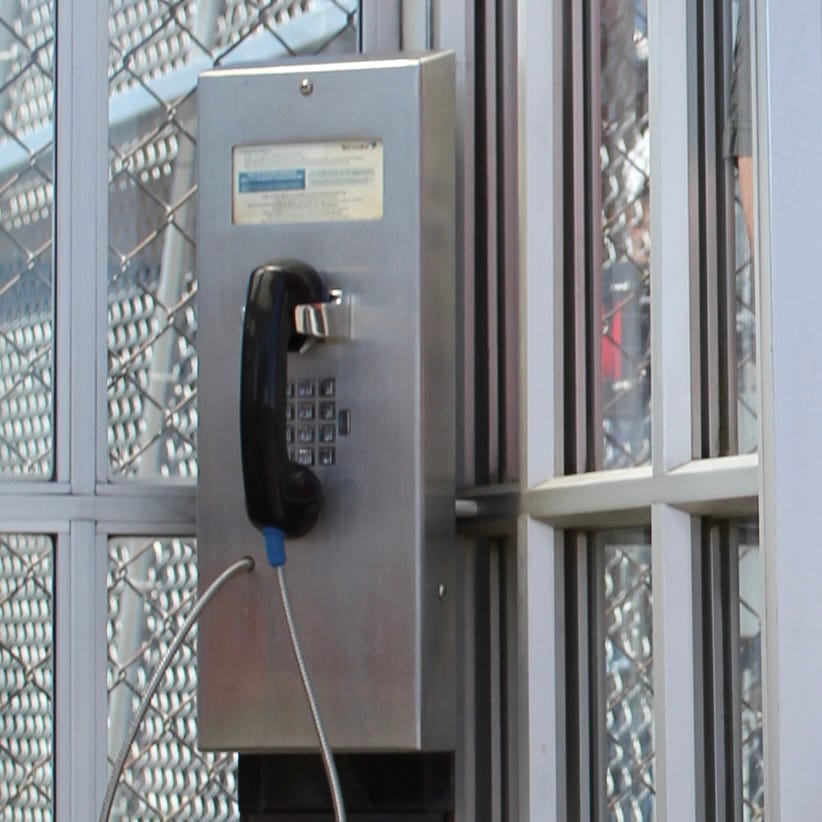
What impacts me daily is fathering through a phone line, writes Chris Lewis in his essay Father Away: The Voice of a Parent Behind Bars. For several years, I have peppered Chris to expand this essay and so every Father’s Day, I hold it back waiting to include the insights he has shared with us in person. Chris has now become a grandfather (twice) and I’m certain that he brings to that role his great curiosity and kindness. As he’s coming close to the end of a long sentence, he has been transferred to a prison where we do not run a workshop, and so I am releasing this at last. I plan to ask him write a piece from home about what it feels like to hold his grandchildren for the first time.
Andrew Morrow’s Son Shine carries fatherly instructions in the form of a love poem:
I want to hear a smile on your face, coming through the phone
Daddy’s always with you, even though he’s not home
Another first day of school, how’d you get so grown
God’s there with you, so you know you’re not alone
Taking a broader view of family, we have included Healing the Blood Line by Jose Luis Sandoval and finally, Family by Kevin Clay: Family from the start looks like a village that holds you, feeds you, cleans you, teaches you. My family is a hand hold, a shoulder to cry on, words of encouragement. My mother cares, my dad is strong, my sisters follow. I’m a brother who leads.
Those of us fortunate enough to benefit from the steady love of a father recognize the profound place this person occupies in the mooring of our stories. When I read the work of this group of writers, I recognize the courage they bring to their role and the effort they exude be present in absence. The phone calls, the letters, the short in-person visits become concentrated reflections of their best selves and are filled with a promise to return home as soon as they are able.
And to my dear dad, I love you. I’ll call home! | TDS