

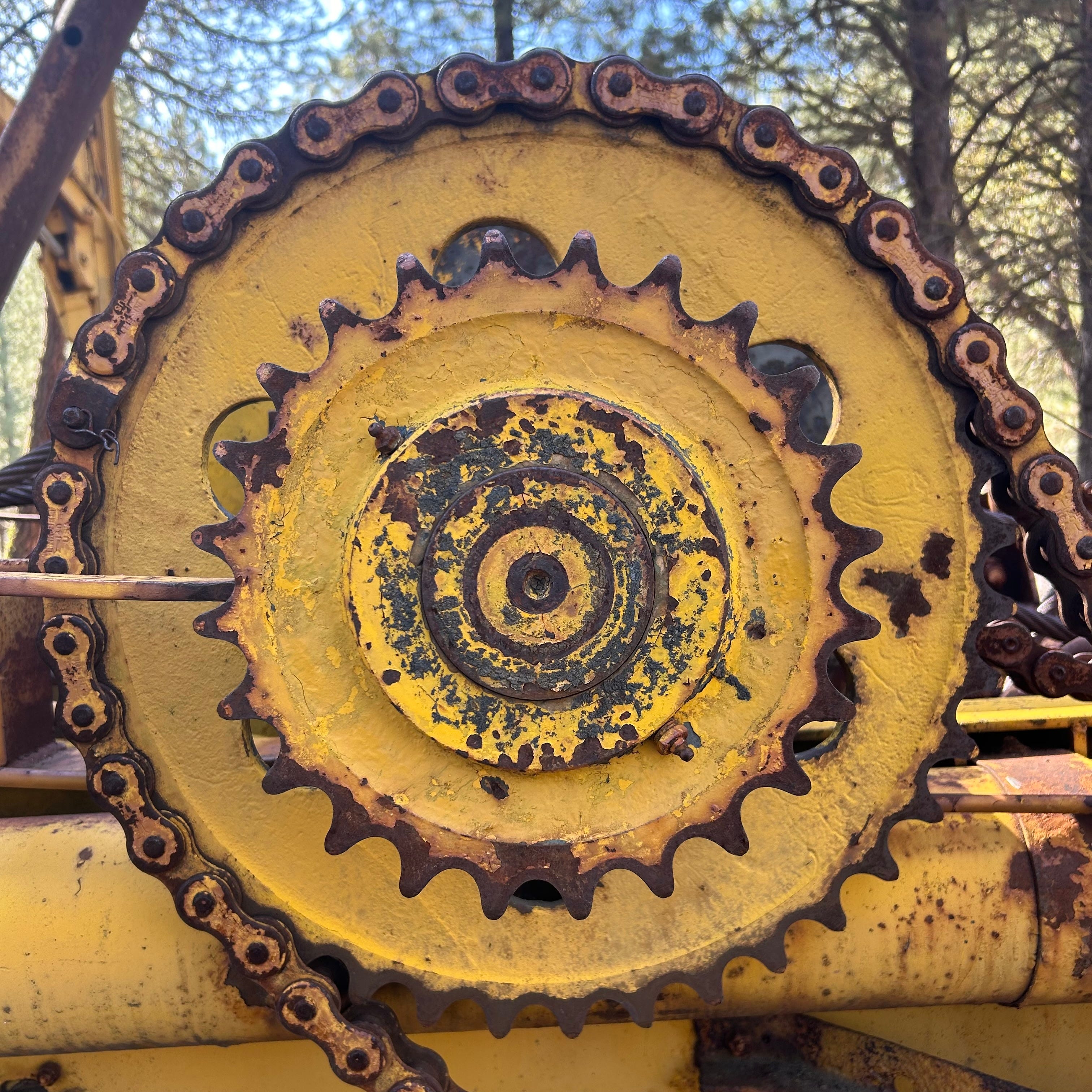
CIRCLES.
“Certain kinds of black men’s stories,” Elizabeth Alexander once wrote, “are ever in vogue, stories that offer the easy paradigms of criminality and putative redemption.” My life and career after prison bore that out. When I came home, I confessed my crime to anyone who would listen, emphasizing my mastery of what I called the three R’s of rehabilitation: regret, remorse, responsibility. I pursued achievements that I thought would validate me in the eyes of others. I earned a bachelor’s degree, wrote an award-winning poetry collection and had a memoir about my time behind bars published. My story brought me recognition, but my writing often felt like a return to the scene of the crime. I didn’t realize how, in telling my story of redemption, I was also internalizing the state’s judgment of me as a threat.
“A Gun Derailed My Childhood. As An Adult I Found Relief at the Range.”
by Reginald Dwayne Betts
New York Times Magazine, May 17, 2026
We carry Betts’s books of poetry in and out of prison to use in our workshops. I admire the nimble movement of his phrases on the page and his unblinking honesty. Betts is the kind of poet who holds our writers’ attention. At sixteen he fell and served little over eight years of a nine-year sentence. Upon release, he propelled himself from prison cell to college, to Yale Law School, to acclaim as a poet, MacArthur Fellow, and now he engages in acts of service through his Freedom Rings project (installing beautifully constructed and appointed libraries in prisons across the country.) While, these accomplishments are impressive to our writers, they are most compelled by the seamless construction of his writing as it weaves his carceral history into life outside the walls. Here is a poet who sees with their eyes.
Throughout the “Gun Derailed” essay, I circle back to Betts’s “Three R’s of rehabilitation: regret, remorse, responsibility.” These themes cycle prominently in our workshop conversations. You see, the label “felon” leaves sticky bits of fear and shame to the story, and as Betts describes even his accomplishment can’t quite wipe away the residue. When I read this story of an exceptional man, I think of the incredible pressure placed on returning citizens. If a MacArthur Genius can’t crack the stigma ?!! … the question plagued me and so I brought it to this week’s workshop. We discussed the Betts article and then, I asked the participants to weigh the extraordinary against the ordinary and write about their relationship to it. In one conversation we discussed how the everyday view of the mountains seen from the prison yard in Madras would be awe-inspiring for a person at Oregon State Penitentiary in Salem. In response to Betts’s biography, OH! from Deer Ridge wrote this passage about his childhood:
Gosh, I was a bright child is what comes to mind. How do I know? Cause I was told and acknowledged all the time. I miss that child. I wasn’t so much a nerd but more like a scholar, loving to learn every minute of every hour. My brain was my tower or power. I was always ready for praise cause I did what was right (that’s just the way I was raised) until I met my rival, abuse and being afraid. No longer wanting to shine to not be noticed and keeping a target of my behind. My mind’s decline began when I would hide and think of crimes. Unknown to me, they were ways of protection — a way to seek attention and affection. Instead, I became infected, bright as a blacklight.
When OH! finished reading, there was a collective exhale in the room. We listened with rapt attention as we considered a child’s bright light taking a different cast when it was exposed to abuse. In these moments, we feel the profound good fortune to have meet, even if the conditions are less than ideal. Our quiet poet, OH! has let us in a little bit closer and it is extraordinary.
RINGS.
Everyone needs a reason to remember,
Even if remembering brings about tears.
Shahid will tell you he knows the ugliest among
to be a rugged child to disappear, &
Still failed to vanish, breaking great with men
Who carried life sentences like clichés
— Rings, Reginald Dwayne Betts
This collection of writing is a circulatory system of memories and feelings evoked by the poem, Rings from Reginald Dwayne Betts’s latest book Doggerel.
Dustin Smith from Oregon State Penitentiary writes Rings/Memory:
I remember my father’s rings most of all. He was a reserved man. He didn’t ascribe to any ostentation. He learned, as we all do, to build up walls too high to see over. The barbarians at the gates can be kept outside if he built his walls high enough. Yet, I always remember the rings.
You See the Ring by Yeyin Chin at Oregon State Penitentiary:
Before you die, you see the ring …
O-rings, glow rings, sucker pop rings and “bling” rings,
these are a few of my favorite things.
Jesse James Jimenez from Snake River writes Alone:
Alone.
The Most Comforting Feeling.
No Worries Of Life And Death.
Without Responsibility To Another.
Robert Tsow writes Walls and Fences from Snake River:
You see believe it or not through incarceration we learn our self-worth, just because we’re in this predicament we shouldn’t be kicked to the curb, no we shouldn’t be stripped away from equal opportunity that we deserve, these walls & fences puts us through trials & and tribulations
Michael Stephina from Snake River writes Rings:
This day comes to be yesterday,
Where do I find you?
I look forward only to see the past
It reminds me of why I can’t find you.
Grandmother’s Rings by Le’Var Howard at Oregon State Penitentiary:
My grandmother was wise and has always told me she sees too much of her daughter in me. Things I would do or how I fell in love with melodies, music. She sat up in the living room of our small apartment, waiting all night playing with her purse. She knew her words were echoing in my head, that she had touched my heart, and I didn’t know what to do with my guilt.
This is how love brings
You to tears. Some of us accumulate
Rings like dogs, each finger holding its own
Promise & history.
— Rings, Reginald Dwayne Betts