
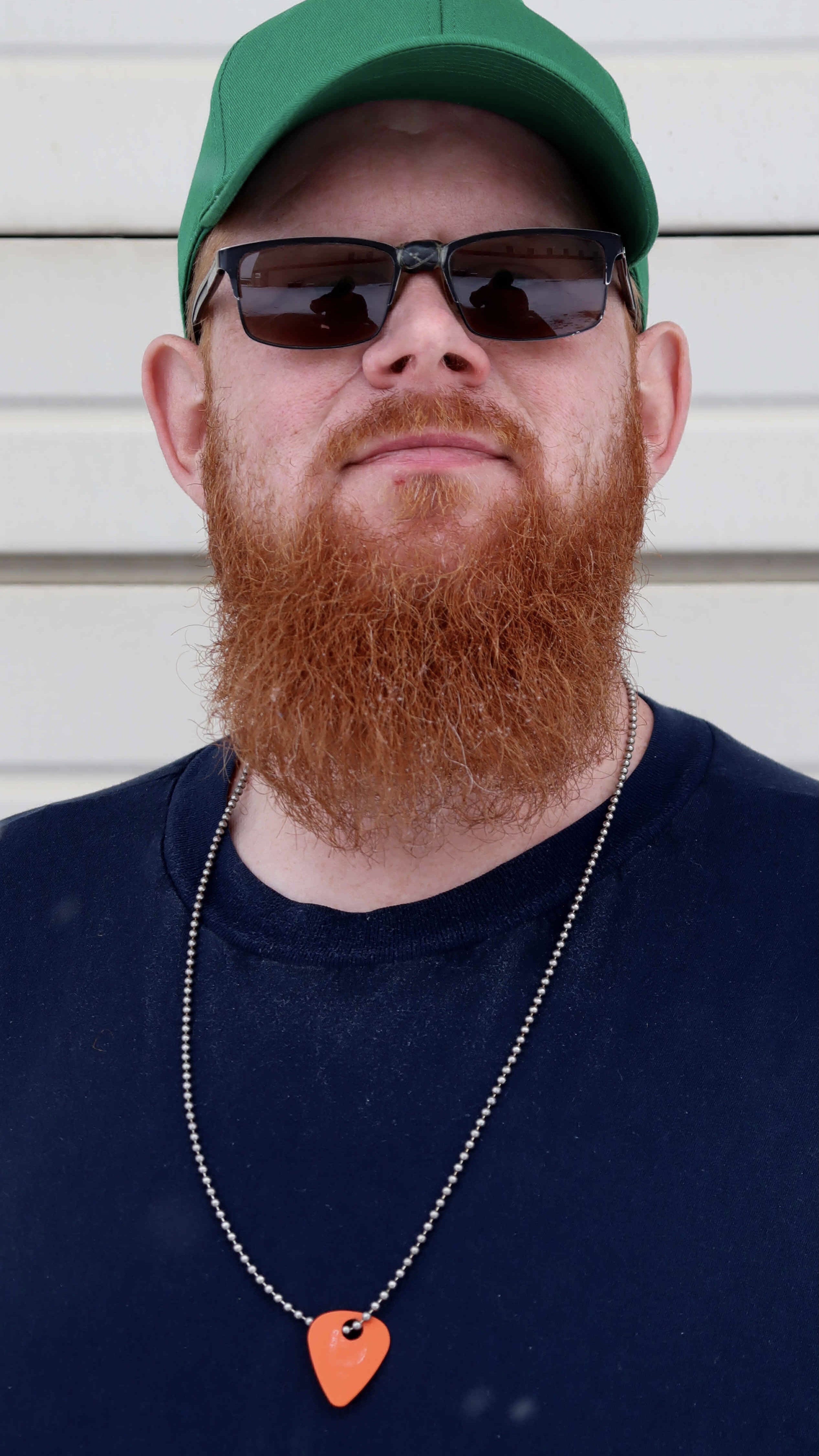
Jacob Harper-Leonard died on April 2. He was 41 years old.
I met Jacob about two years ago in a writing workshop called PonyXpress. He was a good writer, but a better orator. When Jacob would read his pieces aloud, he spoke with such emphasis and force that it elevated his writing beyond the sum of the nouns and verbs. It was as if his voice was its own literary device. Where I might hope to write a clever metaphor, Jacob could simply speak cleverness into his words.
I remember a line from one of the first pieces he read:
“I, a man alone with a pen.”
It carried such weight, as if this man could conquer anything if armed only with his pen. Even before he died, I thought this was one of the most memorable lines I had heard in our workshop.
Jacob died of a heart attack, from what I am told. The prison we both live in was shut down for a brief period while an ambulance and medical staff responded. I didn’t live on the same unit as Jacob, but from what I gathered, his passing was instantaneous. It has emotionally impacted a lot of people.
Shortly after I met Jacob at the writing workshop, he was hired as a reporter for our prison newsletter, where I am the editor. Jacob was a co-worker for a short time and he covered several meaningful stories while we worked together. When I edited his work, I could not help but hear the words in his baritone voice with its heavy timbre. It made the writing wonderful to work with.
“I, a man alone with a pen.”
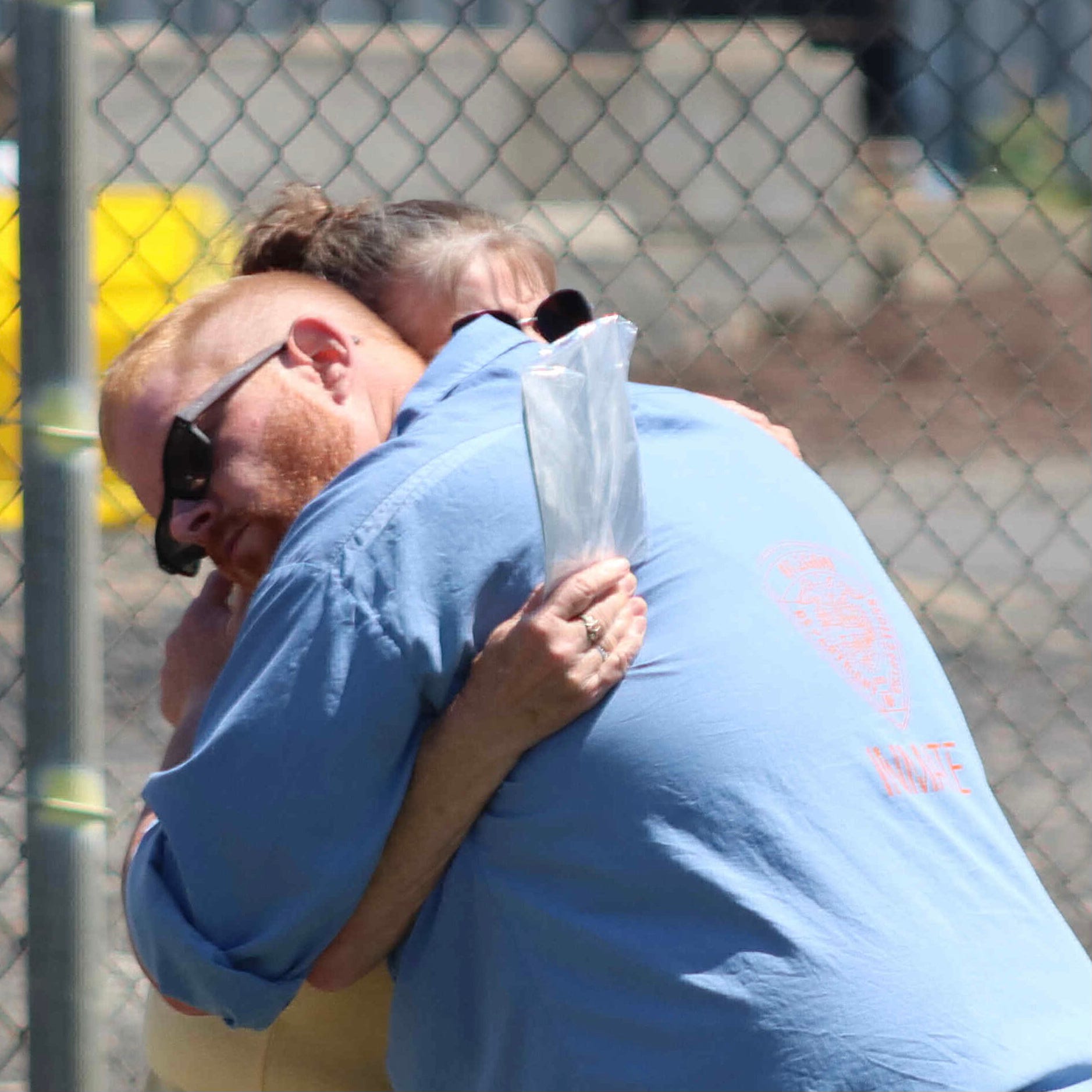
In June 2025, shortly after Jacob left his job and we were no longer co-workers, he attended a family visiting event with his mom. These family events are twice yearly barbeques for incarcerated people and their loved ones. I was covering the event for our newsletter.
Jacob’s mom wore a yellow shirt with the image of a bee and a flower on it. I don’t know why I remember that.
Her name was Jackie, and when I met her I took the chance to talk about all the great work he had done and the stories he had written.
Somebody did this for me once, when I was young – my boss bragged about my work when he met my parents by happenstance. There was something about the compliment going directly to my parents that was uniquely satisfying and filled me with pride. It’s a feeling that’s always stuck with me, and whenever I have the chance I try to pay it forward.
But now, I find it difficult to think of Jacob’s mom in her yellow-bee shirt. I feel my own grief, but imagining his mom’s pain is too much. Who will tell her about her son? Who will comfort her in her grief?
I think it’s heart breaking, but that’s an inaccurate use of words. Hearts are made of tissue, not bone. It’s not a break, it’s a wound. It’s a deep cut that bleeds out, shredded tissue smashed to a pulp that can never be healed the way a break can.
In prison, there is no grief counseling. There are no grief support groups. Memorial services don’t exist. So I bottle up my emotions, push them down and pour my thoughts into my work, into my routine, into my everyday tasks. I think a lot of other people cope in the same way.
Jacob passed away in the afternoon, but by 5:15 p.m. prison operations were back to normal. The dinner meal service ran on time. Recreation yards continued. Night classes for the prison’s college students went on as usual. I’m one of the college students. The day Jacob died I had a sociology quiz.
It’s shocking when someone passes unexpectedly, and I find myself compartmentalizing and categorizing what I knew about him as a way to process the moment. I remembered that Jacob was an avid musician and I had seen him perform at many concerts and open mic nights.
Six month ago, in November 2025, Jacob participated in a concert with the PonyXpress team at our facility. It is common for our writing workshops to have a little music because one of the workshop’s founders, Danny Wilson, is a musician in his own right.
Jacob can play bass and joined Danny on stage to perform Johnny Cash covers. They rehearsed only briefly before the concert. Tracy Schlapp, the other PonyXpress founder, arranged for the writers to read their work in between sets. It was a unique event and I attended in an official capacity, taking photos for our newsletter. That month, Jacob and Danny made the front page.
As I think about Jacob and who he was as a person, I realize that I didn’t know him very well. I know some of his tenets: a writer, a musician, a person of faith, a son. But I have a very incomplete understanding of what shaped him and the depth of each tenet. I feel regret for not having known him better, when death feels so final to me. I didn’t have a meaningful connection with him in the way I could have, and this is a painful thought now that the chance has passed. Our relationship is sealed as it was in the moment of his death.
I recall his words in a different light now, wishing I could go back and respond to them. He said, “I, a man alone with a pen.”
And his voice was so forceful and emphatic that I could never forget the words. But I regret that I never told him how good this piece of writing was. I regret that I never connected with him as a good friend, which would have been easy when we had so much in common.
Prisons are factionalized places, full of imagined boundaries.
I wish that I could go back to when I first met him in our writing workshop. I wish that I could relive this moment, changing the trajectory of our relationship.
In my imagination, this relived moment goes as so:
Jacob says, “I, a man alone with a pen.”
And I place a hand on his shoulder and have the courage to say, “No, man. You’re not alone.” | PL
READ: THE ECHO | EOCI NEWSLETTER | NOVEMBER 2025
